ServicesCommercial Windows
Commercial Windows in Issaquah
We replace and repair windows in storefronts, small offices and mixed-use buildings. We explain the framing and glass options in plain terms, from thermally broken aluminum to fiberglass, so you can choose what suits your building's use, budget and energy code requirements.
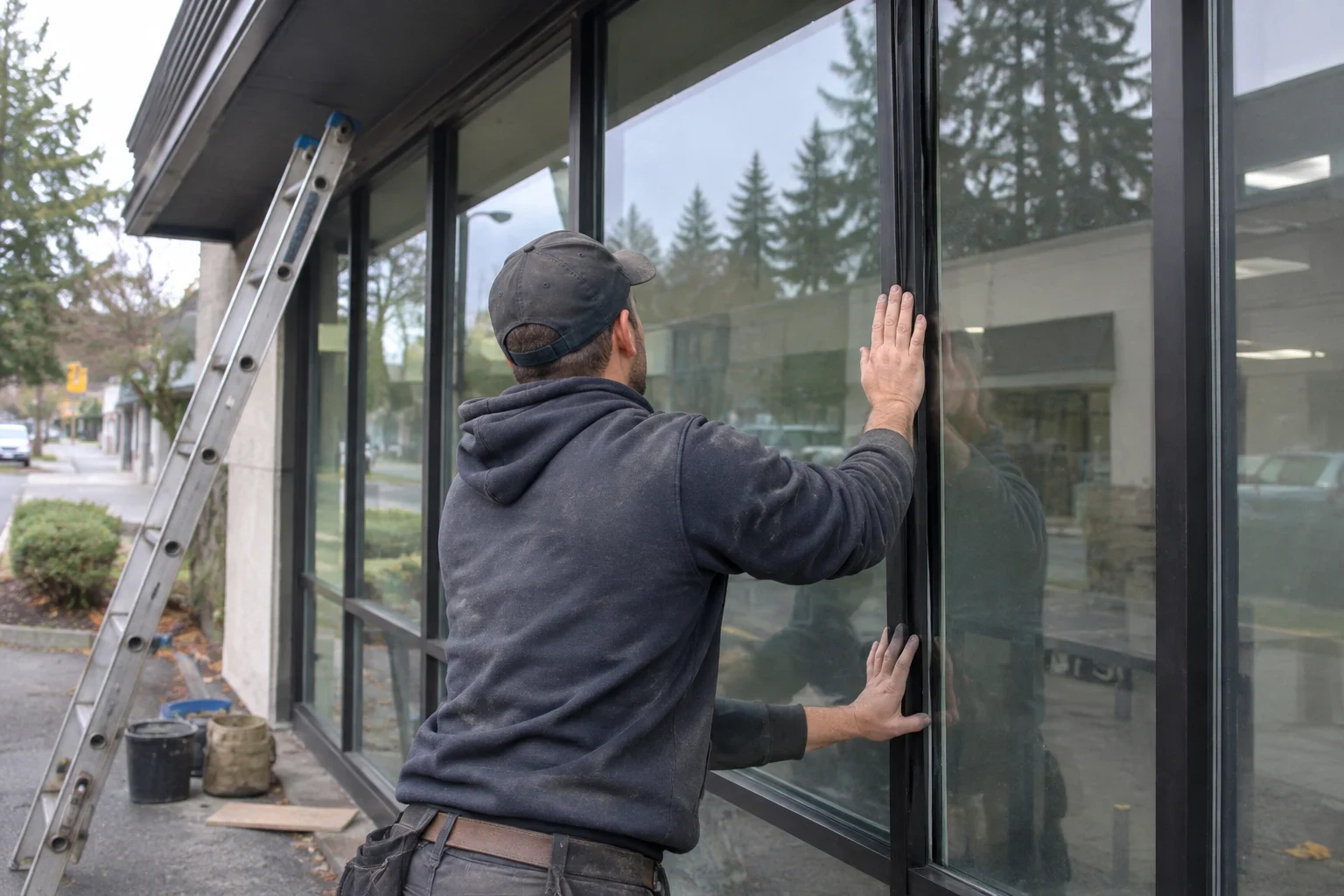
Windows for buildings that stay open while we work
Commercial glazing asks more of a window than a house does. Frames take daily traffic, larger panes need thicker or treated glass, and the energy code for commercial buildings sets its own limits on how much heat a window can lose. We handle commercial windows for business owners and property managers who want those requirements met without a sales pitch.
Most of our commercial work is in low-rise buildings: retail fronts, clinics, offices and the ground floor of mixed-use properties. Material choice drives most of the result. Aluminum storefront framing is strong and slim, but without a thermal break it carries cold straight to the inside face and sweats through a wet Issaquah winter. Fiberglass barely expands or contracts with temperature, which keeps seals tight on large units. Commercial-grade vinyl suits smaller office openings where budget matters more than narrow sightlines.
We plan the work around your hours so customers and staff can keep using the space.
What a commercial window job covers
Thermally broken aluminum framing
For storefronts and wide openings, we install aluminum frames with a polyamide or poured-urethane thermal break between the inner and outer extrusions. The break stops the frame from acting as a cold bridge, which cuts condensation on the interior side.
Insulated glass units
We specify double-pane units with low-E coatings and argon fill, and triple-pane where road noise or a tight energy budget calls for it. Warm-edge spacers reduce the cold line around the glass perimeter.
Safety glazing where required
Glass beside doors, close to the floor or in large panes often has to be tempered or laminated. We flag those locations before ordering so nothing fails inspection.
Glass-only replacement
When a frame is sound but an insulated unit has lost its seal, we can swap just the glass unit. That keeps the existing framing in place and costs less than a full tear-out.
Flashing and perimeter sealing
We set sill pans, flash the rough opening and seal the perimeter with a sealant matched to the wall, whether that is concrete, masonry or wood framing.
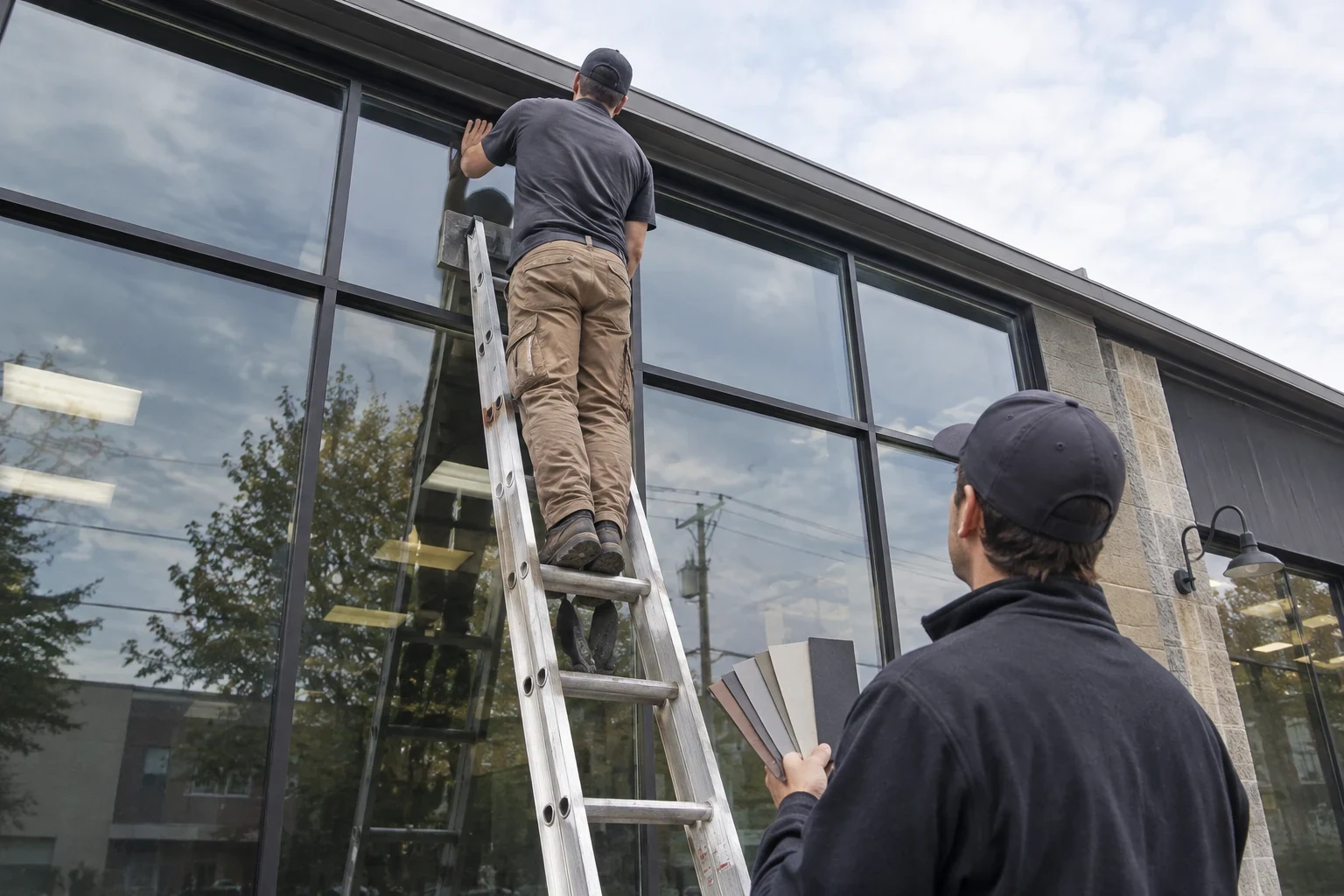
Signs your building's windows need attention
- Fog between the panes
- Moisture inside an insulated unit means the edge seal has failed. The glass will not clear on its own, and the unit has lost most of its insulating value.
- Water on the frames
- Condensation beading on aluminum frames on cold mornings points to framing without a thermal break. Over time it stains sills and feeds mold on drywall returns.
- Drafts near the glass
- Cold air at the perimeter usually means dried-out glazing gaskets or failed sealant. Staff near the windows feel it first, and the heating system works harder to compensate.
- Hardware that sticks or won't lock
- Worn operators, stripped hinges and broken locks are a security problem as much as a comfort one. Window repair can fix some of them, but older proprietary hardware often cannot be sourced.
- Leaks after steady rain
- Water at the sill usually traces back to missing sill flashing or cracked perimeter sealant. Long rainy stretches in fall and winter expose these quickly.
How a commercial window project runs
- 1
On-site measurement
We measure every opening, check the frames and the wall around them, and note which panes need safety glass. You get a written estimate that lists materials and labor line by line.
- 2
Material choice and permit check
We walk you through frame and glass options and what each means for energy performance and upkeep. We confirm whether the job needs a permit and pull it when it does.
- 3
Phased installation
Only a few openings are open at a time, and we can start early or work after closing when that keeps your doors open. Every opening is closed in or covered before we leave for the day.
- 4
Sealing, testing and cleanup
We seal each unit, test operable sashes and locks, arrange any required inspection and haul away the old frames and glass.
What drives the cost of commercial windows
Commercial pricing depends on the building more than on a per-window rate. We price each job from measurements taken on-site and put the breakdown in writing. Flexible payment options are available.
- Frame material and profile
- Thermally broken aluminum costs more than non-broken framing, and fiberglass usually sits above both. Deeper storefront profiles and custom finishes add to the order.
- Glass specification
- Triple-pane, laminated, tempered or tinted glass each raise the unit cost. Larger panes also need thicker glass and more people to set them.
- Access and height
- Ground-floor openings are the simplest. Upper-story work may need a lift or scaffolding, and narrow sidewalks or busy lots limit where equipment can go.
- Condition of the openings
- Rotted framing or water damage found when old units come out has to be fixed before new windows go in. We photograph what we find and talk with you before doing any added work.
- Permits and timing
- Permit fees and after-hours scheduling both show up in the total, and we list them separately so you can see them.
Commercial window questions
- Can you replace windows while my business stays open?
- Usually, yes. We work in sections so most of the space stays usable, and we can schedule around peak hours. Each opening is closed in before we move on, so the building is secure overnight.
- Do I need new frames or just new glass?
- If the frames are straight, drain properly and have working hardware, replacing the insulated glass units is often enough. If the aluminum has no thermal break, is corroded, or water is getting in around the frame, full replacement is the better spend. We show you what we see and explain the trade-off.
- Which frame material is best for a storefront?
- Thermally broken aluminum is the usual choice because it handles large spans and heavy glass with slim sightlines. Fiberglass is a strong option for punched openings in offices, where its low expansion helps seals last. Vinyl works for smaller, simpler office windows on a tighter budget.
- Will the new windows meet the energy code?
- We order units with performance ratings that fit the commercial provisions of the Washington State Energy Code for your building type. We keep the product labels and specs on hand for the inspector.
- Do you take commercial jobs outside Issaquah?
- Yes. We work on commercial buildings in nearby areas including Sammamish, Bellevue, Redmond and Renton. Tell us where the building is when you call and we will set up a visit.
Talk through your building's windows
We will look at your openings, explain the frame and glass options and give you a free quote with no pressure to sign. If some units only need glass or hardware, we will say so.