ServicesPatio Doors
Patio Doors in Issaquah, WA
We replace sliding and hinged patio doors with units in vinyl, fiberglass or aluminum-clad wood, and we set each one over a sloped, flashed sill pan so water stays out of the floor framing. You get a straight answer on which frame fits your opening.
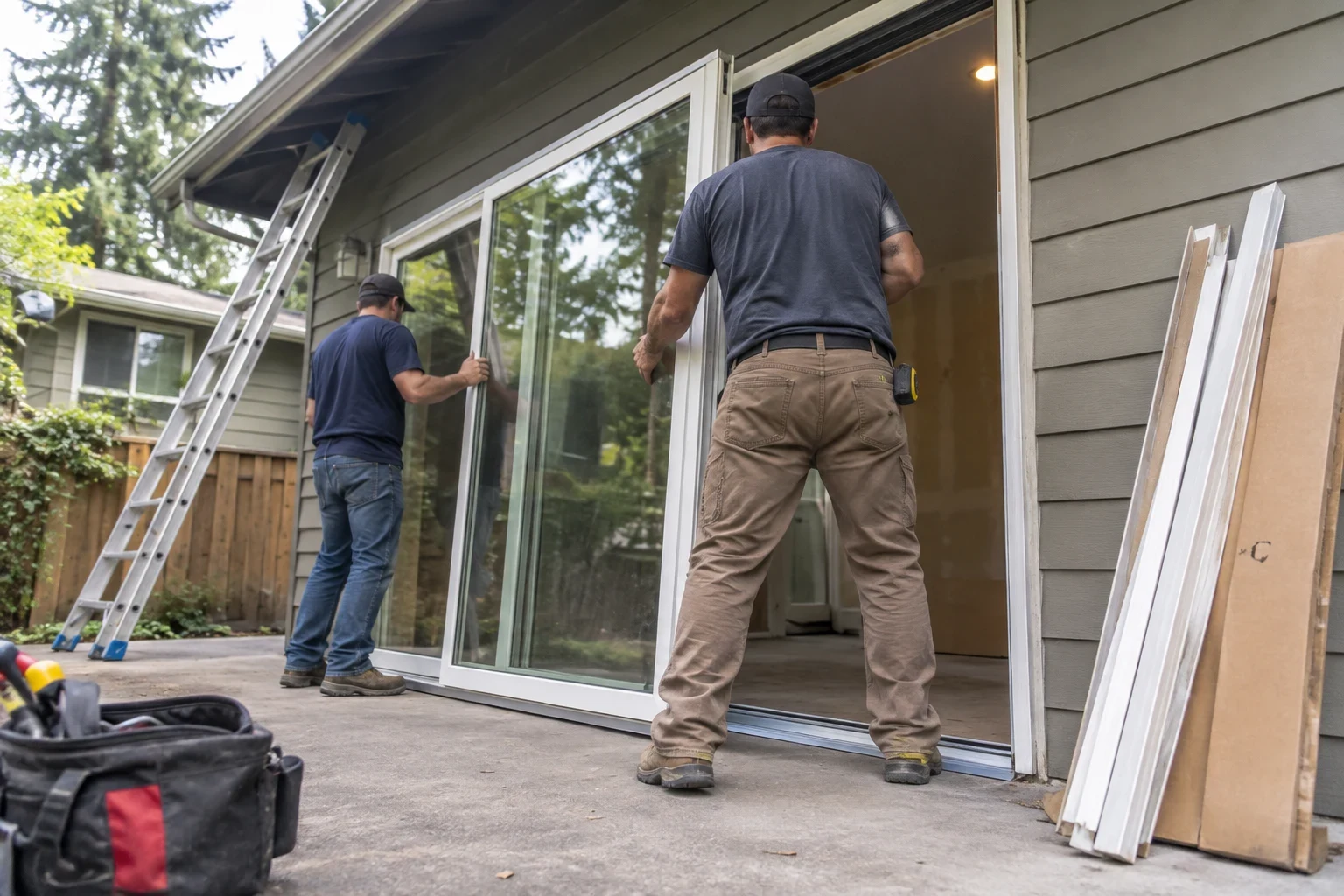
Repair the parts or replace the whole door
Of all the glass in your home, the patio door is the biggest panel that moves, and it takes more abuse than any window. Rollers wear flat, aluminum tracks pit, weatherstripping compresses, and the sill catches every drip that runs off the deck. Many of those parts can be swapped out, and our window repair work covers rollers, locks and failed glass. When the frame has swollen, the sill has rotted, or the insulated glass has failed on both panels, a new door usually costs less over time than chasing parts.
The frame material shapes everything else. Vinyl resists moisture and keeps cost down, but it expands more in summer heat, so wide sliders need reinforced meeting rails to stay stiff. Fiberglass expands at nearly the same rate as glass, which keeps the seals tight and the panels square on large openings. Aluminum-clad wood gives you real wood on the inside with a baked-finish shell outside that sheds rain. We bring samples to your home, explain how each behaves, and let you decide.
Through a long wet season, how the door is flashed matters as much as what it is made of. That part of the job is never skipped.
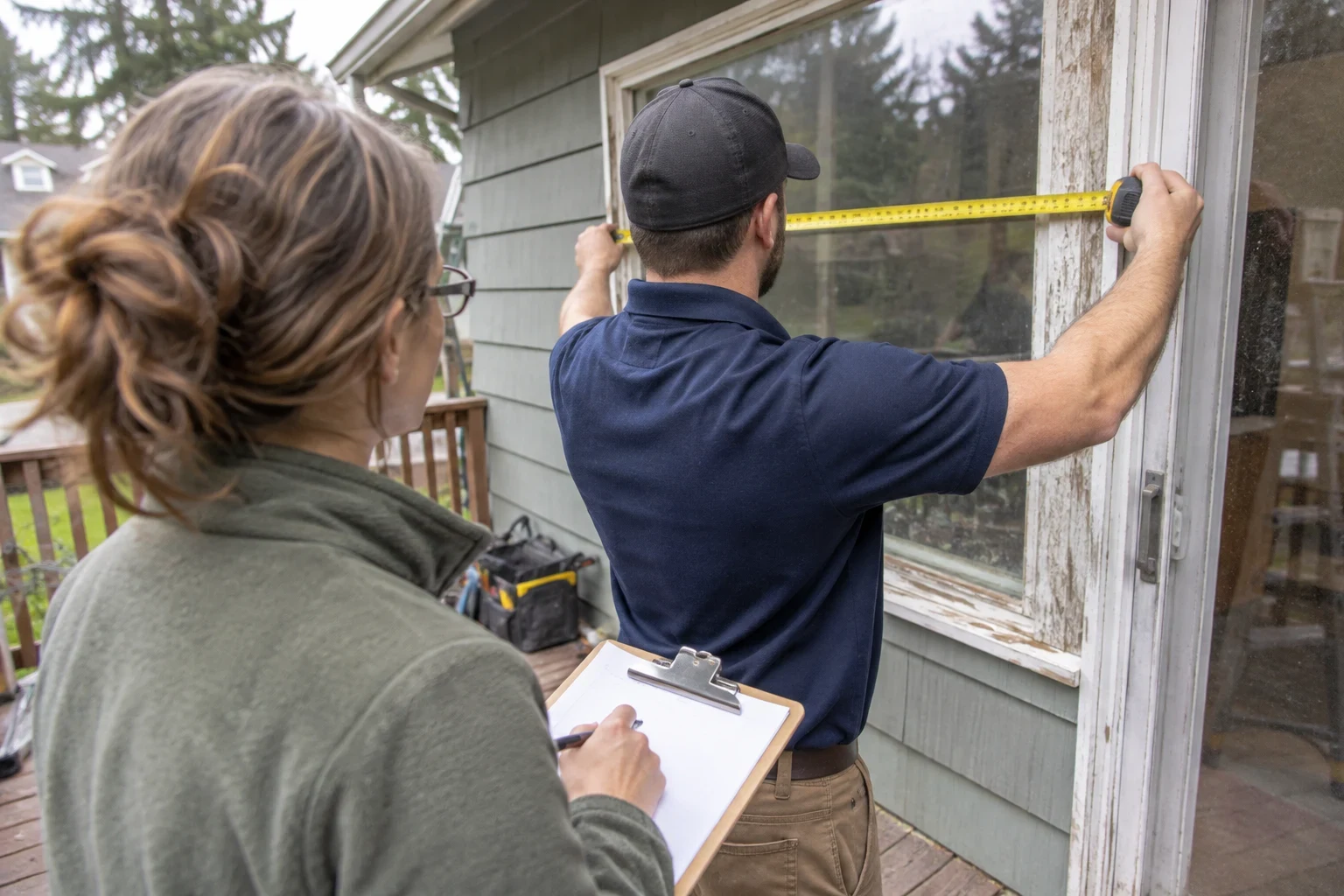
What our patio door installation includes
- 01
True rough-opening measurement
We check the framed opening, not just the old door, and look for soft subfloor or rotted trimmer studs. An out-of-square opening caught at the measure is a simple fix. Caught on install day, it is a delay.
- 02
Slider, French or multi-panel
We install two-panel sliders, hinged French doors with multipoint locks, and wider multi-slide units where the header can carry the span. If a wider door needs a new header, we tell you up front what that involves.
- 03
Sloped sill pan and flashing
Every door sits on a sloped sill pan with a back dam, and flashing tape is lapped shingle-style so water drains outward. A missing or flat sill pan is the most common reason older patio doors rot the floor beneath them.
- 04
Glass that fits the room
Dual-pane low-E glass with argon fill is our standard, and all door glass is tempered for safety. Triple-pane and blinds sealed between the panes are available where you want them.
- 05
Hardware, screens and cleanup
We fit the handle set, keyed lock, foot bolts on French doors and a screen on adjustable rollers. Interior casing is reinstalled or replaced, exterior trim is sealed, and the old door leaves with us.
Questions about Patio Doors?
Call(425) 699-3598Signs your patio door needs replacing
It drags or jumps the track
New rollers help when only the wheels are worn. If the track itself is bent, pitted or pulling loose from the sill, rollers will not fix it for long.
Fog between the panes
A cloudy film between the glass means the edge seal has failed and the insulating gas is gone. On an older door with failing seals in both panels, replacing the whole unit often makes more sense.
Soft or stained floor at the sill
Dark subfloor, lifting laminate or a spongy feel near the threshold means water is getting under the door. That calls for a new door and a properly flashed sill pan, not more caulk.
Drafts at the interlock
The vertical rail where two slider panels meet should seal tight. Cold air there usually points to worn weatherstripping or a frame that has warped out of line.
Swollen or peeling wood
Unclad wood doors that face weather tend to swell, stick and shed paint at the bottom rail. Once the joints open, the wood keeps taking on water.
The lock no longer lines up
When a door has to be lifted or shoved to latch, the frame has racked. Adjusting the strike only hides the problem for a while.
How a patio door job runs
- 1
Consultation and measure
It starts with a phone call and a no-pressure consultation. We visit, measure the rough opening, show frame samples, and give you a written estimate with each option priced.
- 2
Ordering your door
Patio doors are built to size, and lead times vary by frame type and manufacturer. We confirm your install date once the door is ready.
- 3
Removal and opening prep
We cover floors and furniture near the work, remove the old panels and frame, and inspect the subfloor. Any rot repair has been discussed with you beforehand, with photos of what we found.
- 4
Setting the new door
The sill pan goes in first, then the frame is set in sealant, shimmed plumb and square, and insulated with low-expansion foam. We flash the sides and head, then adjust rollers, hinges and locks until the door moves cleanly.
- 5
Walkthrough and cleanup
We show you how to adjust the rollers and keep the weep holes in the track clear. Most installs finished in a single day, and the opening is closed and secure before we leave.
What moves the price of a patio door
Patio door pricing depends more on your opening and the material than on a brand name. After we measure, you get a free quote broken out line by line so you can see what each choice adds. Flexible payment options are available.
- Frame material
- Vinyl is usually the most economical. Fiberglass and aluminum-clad wood cost more, and a wood interior still needs to be stained or painted.
- Size and configuration
- A wider slider, a French door with two active panels or a multi-slide unit each changes the price. Heavier panels also call for sturdier rollers and hinges.
- What is under the sill
- Rotted subfloor or a damaged rim joist gets fixed first, since a new door needs solid framing beneath it. The full extent only shows once the old frame is off, so at the measure we explain what we might find and how that repair would be priced.
- Changing the opening
- Widening an opening or turning a window into a door means a new header and usually a building permit. We handle the permit when one is needed.
- Glass and hardware
- Triple-pane glass, between-glass blinds, decorative grilles and upgraded handle finishes all add to the total. We price each one separately so you can choose.
Patio door questions
Should I choose a slider or a French door?
A slider saves floor space because nothing swings into the room, which suits a tight dining area. A French door opens wider and seals with compression weatherstripping and a multipoint lock, so it tends to block drafts better. We can show you both at the consultation.
Is vinyl strong enough for a large slider?
It can be, if the door has steel or aluminum reinforcement in the meeting rails. Unreinforced vinyl on a wide opening can bow over time and let air past the interlock. For very wide or dark-colored doors, we usually point you toward fiberglass.
Can you replace just the glass or the rollers?
Often, yes. If the frame is sound and the sill is dry, our window repair service can swap worn rollers, a failed glass unit or a broken lock. We will tell you honestly which route makes sense.
Will my flooring be damaged during the install?
We protect the floor near the opening before anything comes out. Flooring that butts against the old threshold sometimes needs a small trim piece afterward, and we point that out at the measure.
How long will the opening be exposed?
Most installs finished in a single day. The old door comes out and the new one goes in during the same visit, so your home is closed up and locked before we leave.
Pick the frame that suits your opening
We will measure your patio door opening, bring samples of vinyl, fiberglass and clad wood, and explain how each one will hold up. You get a free quote with every option priced.